
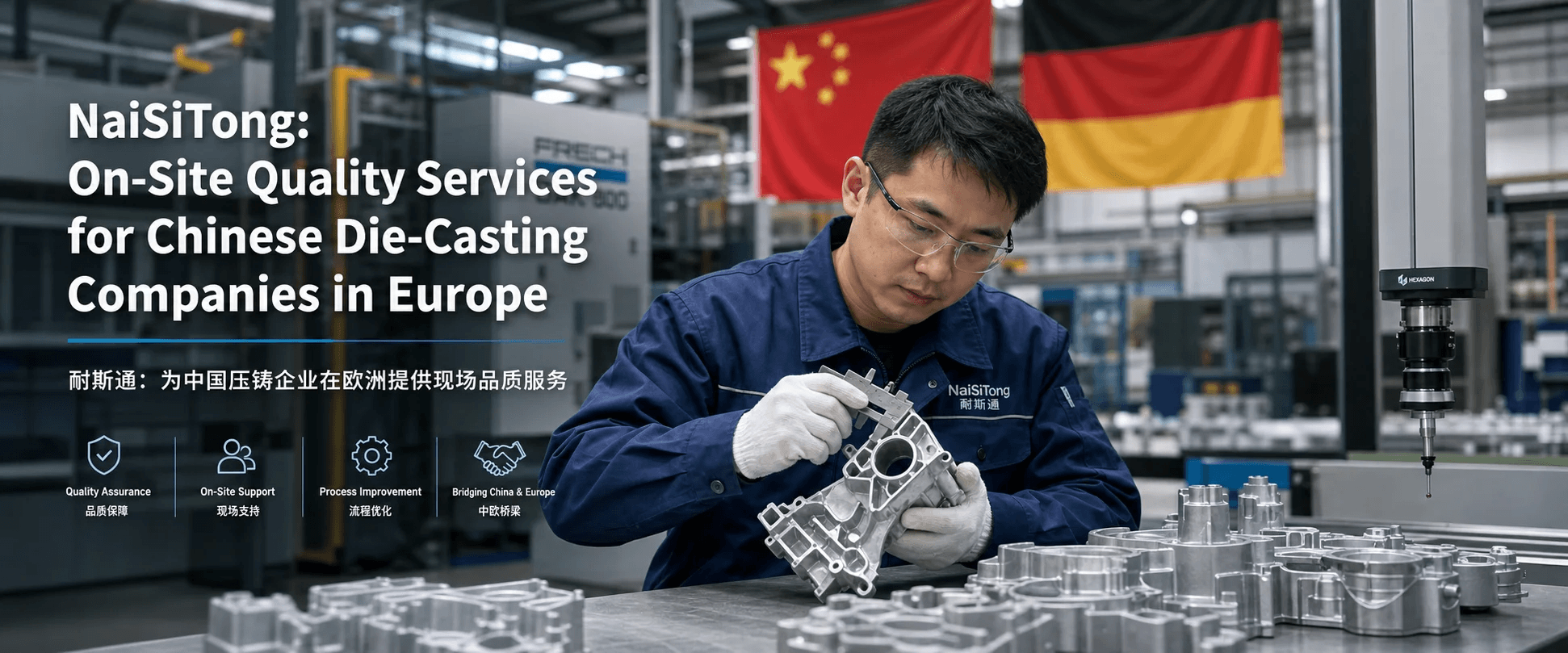
I spent 31 days in March and April visiting 63 die-casting, mould-making, injection-moulding, and equipment companies across China. The conversations were intense and the pattern was unmistakable: the parts are getting better, the ambition is real, and the push into European markets has shifted from “should we?” to “how fast?”
A few days after I got back, I opened LinkedIn and saw three contacts — founders and export managers I’d met during the trip — already on the ground in Germany. Not at trade shows. In customer factories. Sorting out deliveries, negotiating acceptance criteria, closing complaints. One landed in Stuttgart on Monday morning. Another flew into Frankfurt on Saturday night because an SQE had emailed about flash on a batch of gearbox housings and the line was going down.
This isn’t just a Chinese story. If you run a die-casting plant in Pune, in Izmir, in Busan, or anywhere else exporting to European automotive — you know exactly what I’m describing. The moment your parts arrive in Europe, the real challenge begins. And when the email comes — flash, porosity, a dimensional drift on a critical feature — you need someone at the customer’s factory gate. Not on a video call twelve time zones away while your customer’s production manager stares at an idle line.
The default move is to put a senior engineer or quality manager on a plane. It feels like the responsible thing to do. But flying someone over for a week rarely solves the root problem. By the time they land, get through immigration and the rental-car queue, find the factory, and sit down with the customer’s quality team, two days are gone. Three days of sorting and rework later, they fly home. And a week after that, the next batch arrives with the same issue — because nobody was home watching the process.
What actually gets the job done isn’t a fire-fighting visit. It’s having someone already there: an engineer who understands the process, speaks the customer’s technical language, and can walk onto the production floor the next morning. That’s what NaiSiTong does.
What we do
On-site sorting and rework
When your European customer flags a quality issue, someone needs to be at the facility within a day or two — not a week or two. Our engineers are based in Germany, and our Polish node is nearing completion, which will extend coverage across Central and Eastern Europe. From notification to boots on the ground: 24 hours for German customers, 48 hours for the rest of the EU and Schengen zone.
This is not “someone with a camera.” It’s an engineer who walks the customer’s production line, sits down with their quality team, and aligns on the inspection standard face to face — before a single part is touched. Every component is judged against the customer’s specification, one by one. OK / NG / rework. Data goes to you and the customer the same day.
And when a part can be saved on the spot — flash removed with a hand tool, a burr deburred, a thread chased — it is. The part goes into the customer’s inventory instead of back onto a pallet destined for a six-week return voyage. The line keeps running. You keep the freight cost in your pocket.
Full claim management — from first email to closure
A quality complaint in cross-border manufacturing follows a predictable and expensive path: the customer emails, you reply, the customer asks for photos, you request more detail, the customer CCs their purchasing manager, the tone tightens. Days pass because of the time difference. Sometimes weeks. Nobody is stalling — everyone is just on opposite clocks.
We take the entire claim cycle off your plate. From the moment the complaint lands:
- On-site defect assessment. Our engineer is at the customer’s facility, examining parts against their specification. Defect type, severity grade, batch proportion — documented, photographed, categorised the way the customer’s quality system expects it.
- Solution negotiation, in person, same room. No email chains. No “we think the photos show cold shut but we’d need to confirm.” Our engineer and the customer’s SQE look at the same parts on the same table and decide together: sort, rework, return.
- 100% sorting and rework execution. Every single part is inspected. Good parts go directly into the customer’s stock.
- Daily defect-data delivery. Structured data, formatted for the customer’s quality management system, sent to you and the customer every day. When the claim closes, you have the full paper trail.
Two-way supply-chain matching
The service runs in both directions. While we handle quality containment for Asian exporters on the European side, we also help European buyers connect with capable die-casting, injection-moulding, and tooling suppliers in Asia. Factory audits, project follow-up, shipment confirmation — our team on the ground in China handles the supplier side, while the German team aligns requirements with the European buyer. It’s the same logic in reverse: local presence where the work actually happens.
Why NaiSiTong
Engineers who can diagnose, not just photograph
This is the part most people get wrong about on-site services. They assume the job is: show up, take pictures, send a WhatsApp message. If that were enough, the customer would ask their own warehouse staff to do it.
What a European quality manager actually needs — and what earns their trust — is someone who can look at a defect and make an independent technical judgement. Is this cold shut or a low mould-temperature issue? Is the porosity at the parting line or at the fill end? Is this a one-off or a systematic process drift?
Our team includes multiple engineers with over ten years of hands-on die-casting experience. Three are permanently based in Germany. When one of them arrives at a customer facility, they’re not learning on the job. They’re reading the defect signature the same way your own process engineer would — and they’re doing it in a language the customer’s SQE trusts.
The difference this makes is hard to overstate. A European SQE who sees that you’ve sent a real engineer — not a temporary labourer with a checklist — is far more likely to work with you on reasonable acceptance criteria. They’ll agree to rework instead of reject. They’ll accept data they can use. And the claim closes faster, which is the only metric that matters.
Response speed that actually matches the urgency
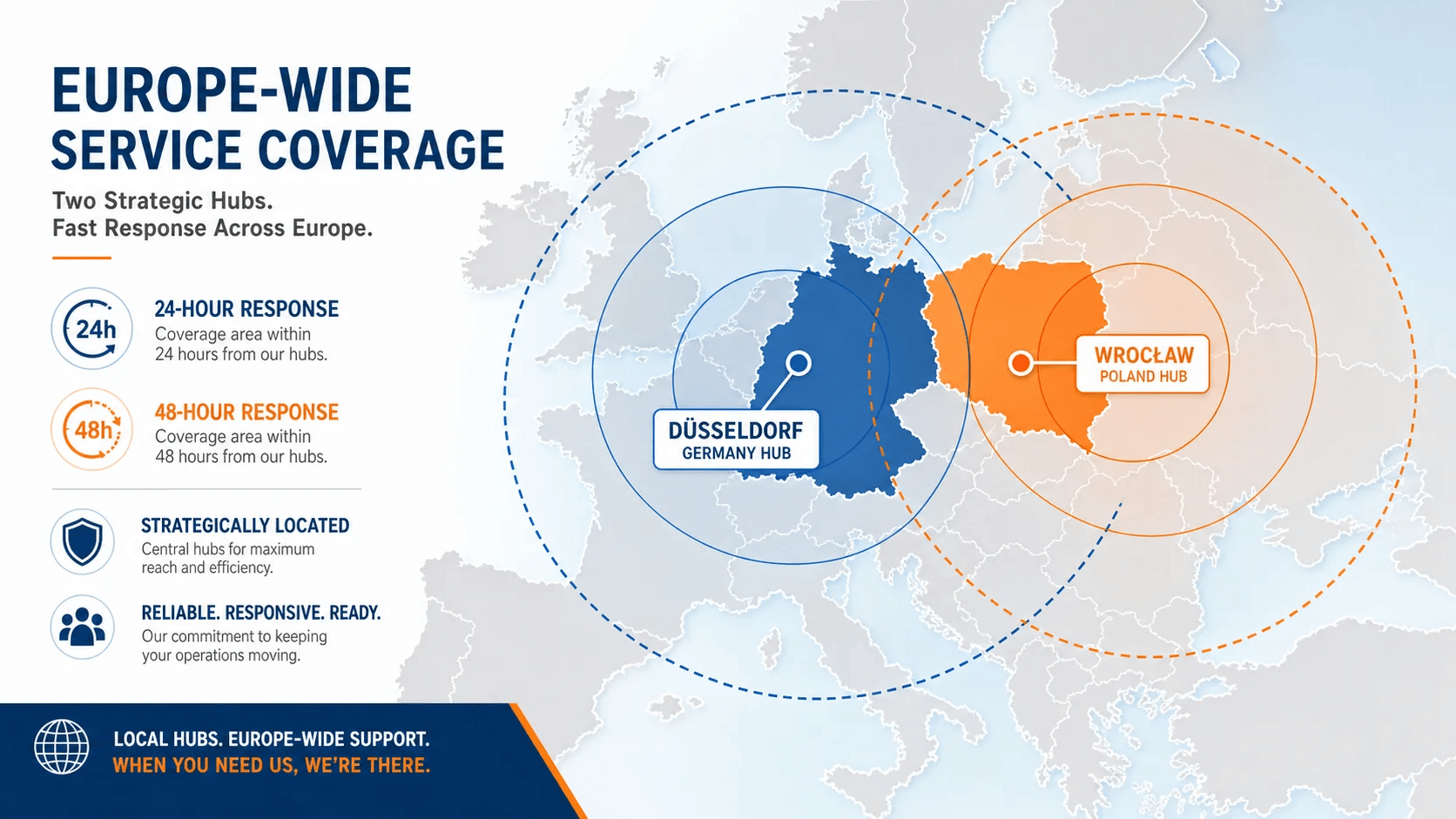
| Scenario | Response time |
|---|---|
| German customer | Within 24 hours |
| EU / Schengen zone (other countries) | Within 48 hours |
| After-hours emergency call | Dedicated handler, no queuing |
There’s no multi-step contract approval process standing between the phone call and the first person on the road. One call to confirm the requirements, and someone is already moving. That’s not marketing language — it’s how the service is structured. Engineers are positioned in Germany for exactly this reason.
Cross-cultural communication that eliminates the translation tax
Anyone who has managed a cross-border quality claim knows the pattern: technical terms get mangled in translation. “Shrinkage cavity” becomes “porosity” becomes “blowhole” — three different defect classifications in three emails, and the customer’s SQE is now convinced you don’t understand your own process. A batch gets written off because the translation made the problem sound worse than it was.
Core members of our team have spent over a decade living and working in Germany. They navigate business communication and technical negotiation without the friction that costs time and trust. When you brief them in your language, they translate the intent — not just the words — to the customer’s SQE. “Sand inclusion” doesn’t get lost in a chain of dictionary translations that ends with the whole batch condemned. The standard gets aligned correctly, and the parts get judged on their actual quality — not on a misunderstanding.
Proven track record with the names that matter
We provide ongoing support to multiple top-tier die-casting and tooling companies. The European end customers we serve include:
- Bosch
- Magna
- ZF
- Siemens
These are organisations that run tight supplier quality systems. They don’t accept on-site support that can’t deliver real data and real decisions. That we work with them regularly is the only credential that matters.
A real scenario — what 48 hours actually looks like
May 6, midday. A die-casting customer calls. A Tier-1 plant near Wolfsburg has received a batch with flash on multiple parts. Further inspection turns up impact damage — dings and dents from handling. The customer wants an immediate sort. Production line is at risk.
The factory is on the other side of the world. Flying someone over means visas, flights, hotels, rental cars — and even at maximum speed, the earliest arrival is a week away. Every day of waiting costs the customer production time. And pulling a senior engineer out of the plant for a week means domestic production takes a hit too.
Here’s what happened instead:
| Time | Status |
|---|---|
| May 6, 14:30 | Confirmed complaint details and feasible approach with the die-casting customer |
| May 6, 15:00 | Factory call to lock down the problem, line requirements, and sorting timeline |
| May 7, 08:00 | Engineer arrived at the customer plant. Face-to-face alignment on inspection criteria with the customer’s SQE |
| May 7, 09:00 | Sorting began |
| May 8, 11:00 | Line confirmed back to normal. Defect rate tallied at 6.7%. Flash parts manually deburred and blown clean with air gun — agreed with SQE. Some impact-damaged parts accepted on concession as non-functional cosmetic. Agreement to address both issues in future production |
| May 15, 14:00 | New batch arrived with no flash issue. Agreed with customer to stop sorting. Final defect rate: 0.3% |
From the first phone call to a running production line: under 48 hours. From sort start to claim closure: one week. The factory didn’t fly anyone over. Domestic production never slowed. The claim closed with data, with documented conclusions, and with a satisfied customer.
That’s the difference between having someone already there and trying to teleport your quality team across eight time zones.
How to start
You probably recognise at least one of these situations:
- A European customer just sent a complaint notification, and you’re trying to decide whether to fly someone over or recall the shipment.
- You already have European projects running, but the volumes don’t justify a full-time resident quality team.
- You’re planning to enter the European market and know you’ll need a local quality-service touchpoint — but don’t know where to start.
- Your customer has demanded containment and you’re not sure what the process looks like, let alone how to execute it from abroad.
Call us. In a lot of cases, a single conversation clarifies the most cost-effective path — and it might save you a round-trip flight to Europe and two weeks of sleepless nights.
- Email: Joseph@NaiSiTong.com
Exporting to Europe is hard enough without quality crises becoming your full-time job. NaiSiTong GmbH — manufacturing capability, delivered at European speed.